


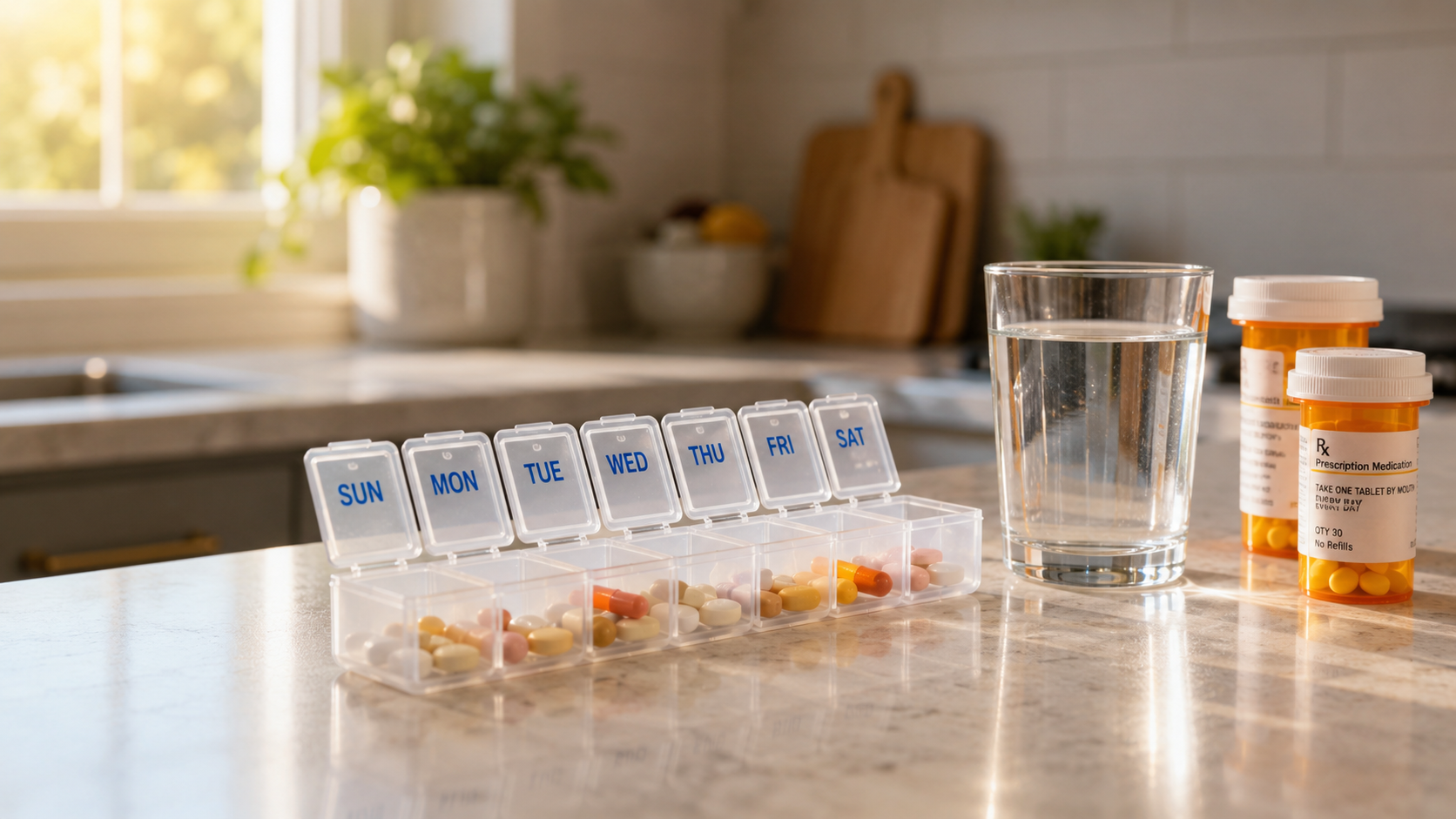
Your father’s pill organizer is full on Tuesday. By Friday, half the compartments are still untouched. Your mother takes her blood pressure medication when she remembers, which lately means she doesn’t take it at all on the days nobody calls to remind her. Your uncle ran out of his diabetes medication two weeks ago and has not called the pharmacy for a refill because he forgot he was out.
These are not hypothetical situations. They happen in homes across Connecticut every day, and they rarely come to light until something goes wrong: a blood pressure spike that sends someone to the emergency room, a blood sugar crash that causes a fall, a drug interaction that could have been avoided if anyone had noticed the new prescription conflicted with the old one.
Medication errors among older adults are not a footnote in geriatric medicine. They are one of the leading preventable causes of hospitalization, disability, and death in people over 65. And the root cause, in most cases, is not that the person did not care or did not try. It is that nobody was there to make sure it happened correctly.
The Scale of the Problem
The numbers are worth understanding because they explain why medication management is not just a matter of buying a pill organizer and hoping for the best.
Roughly 90% of adults over 65 take at least one prescription medication. About 42% take five or more. At least 18% take ten or more on a chronic basis. The proportion of older adults on five or more medications has tripled since the mid-1990s, according to JAMA research published in 2024.
Adverse drug events cause more than 175,000 emergency department visits per year among Americans 65 and older. A significant portion of these are preventable, caused by incorrect dosing, missed doses, dangerous interactions, or medications that should have been discontinued but were not.
Preventable medication errors affect more than 7 million patients annually across all age groups and care settings in the United States, contributing to an estimated 7,000 deaths and roughly $21 billion in direct medical costs, according to research cited by the National Committee for Quality Assurance.
Older adults on five or more medications are 88% more likely to be hospitalized due to drug-related issues compared to those on fewer medications, according to a study published in JAMA Internal Medicine.
The risk compounds with age. The aging body metabolizes drugs differently. Kidney function declines, liver enzyme activity changes, body composition shifts (more fat, less water, less muscle), and the blood-brain barrier becomes more permeable. A dose that was safe at 65 may be dangerous at 80, even if the prescription has not changed.
What Goes Wrong When Nobody’s Watching

Medication mismanagement is not one problem. It is a collection of problems that overlap and compound each other. Understanding the specific failure points helps families identify what their loved one is actually struggling with.
Missed Doses
This is the most common medication error among seniors living alone. It happens for several reasons: forgetting, falling asleep before the evening dose, running out of a medication and not realizing it, or deliberately skipping doses because of side effects they have not told their doctor about. Missing a single dose of most medications is not dangerous. Missing doses consistently over days or weeks can be. Blood pressure creeps up. Blood sugar destabilizes. Seizure medications lose their protective effect. Heart rhythm drugs fall below therapeutic levels.
Double Doses
The opposite problem, and in many ways more dangerous. A person takes their morning medication, forgets they took it, and takes it again an hour later. With blood thinners like warfarin, this can cause internal bleeding. With insulin, it can cause a dangerous hypoglycemic episode. With blood pressure medications, it can cause a fall from sudden low blood pressure. Double dosing is especially common in people with early cognitive decline who still live independently and manage their own medications.
Wrong Time, Wrong Sequence
Some medications must be taken on an empty stomach. Others with food. Some must be separated from other drugs by at least two hours (thyroid medication and calcium supplements, for example). Some must be taken in the morning because they cause insomnia. Others at bedtime because they cause drowsiness. When a person manages a complex regimen alone, timing errors are almost inevitable. They may not cause an obvious immediate problem, but they reduce the effectiveness of treatment and can create subtle symptoms that get attributed to aging rather than medication mismanagement.
Dangerous Interactions Nobody Caught
The average older adult sees multiple physicians. The cardiologist prescribes one drug, the primary care doctor prescribes another, the rheumatologist adds a third. Each provider sees their own piece of the picture. Nobody is looking at the full list. Adding an over-the-counter medication, a supplement, or even a new food (grapefruit juice is a notorious offender with certain statins and calcium channel blockers) can create an interaction that no single provider anticipated.
A 2025 study published in the Journal of General Internal Medicine found that a significant proportion of hospitalized older adults were discharged with medication changes that were not clearly communicated, leading to medication errors within the first week of returning home.
Stopped Taking It Without Telling Anyone
Older adults sometimes stop taking medications on their own because of side effects (nausea, dizziness, fatigue), cost, or a belief that they no longer need the drug. They may not mention this to their doctor. This is particularly dangerous with medications that require gradual tapering rather than abrupt cessation: beta-blockers, corticosteroids, certain antidepressants, and anti-seizure drugs can all cause withdrawal effects or rebound symptoms when stopped suddenly.
Warning Signs Families Should Watch For
Most medication problems do not announce themselves. They develop quietly over days or weeks. Here is what to look for.
- Pill organizer inconsistencies. Compartments that should be empty are full. Compartments that should be full are empty. Pills are in the wrong day’s slot. This is the most direct indicator that something is off.
- Duplicate prescriptions or stockpiles. Multiple bottles of the same medication, some expired, some current. Automatic refills piling up faster than they are being used.
- New or unexplained symptoms. Confusion, dizziness, unusual drowsiness, nausea, bruising, or falls that coincide with a new medication or dosage change.
- Reluctance to discuss medications. Changing the subject when you ask about their prescriptions, or getting defensive when you offer to help organize them. This can signal embarrassment about struggling with something that used to be routine.
- Pharmacy calls going unanswered. Refill reminders that are ignored. Prescriptions that are ready for pickup but not collected. Automatic refill deliveries accumulating on the counter.
- Weight changes, blood pressure fluctuations, or lab values drifting. These can indicate that medication is not being taken consistently or correctly, even when the person insists they are following the regimen.
| THE FOUR MEDICATIONS THAT CAUSE THE MOST EMERGENCY VISITS IN SENIORSResearch from the New England Journal of Medicine identified four drug categories responsible for a disproportionate share of emergency hospitalizations in older adults: blood thinners (warfarin, direct oral anticoagulants), diabetes medications (insulin and oral hypoglycemics), antiplatelet agents, and opioid pain medications. These four categories together account for the majority of drug-related emergency visits in people over 65. If your parent takes any of these, the margin for error with missed doses, double doses, or interactions is especially narrow. |
What Actually Works: Practical Solutions
The tools and strategies below are ranked roughly by complexity, from the simplest to the most involved. Most families find that a combination works better than any single approach.
The Pill Organizer (Necessary but Not Sufficient)
A weekly pill organizer with morning, noon, evening, and bedtime compartments is the baseline. It makes missed and double doses visible at a glance. But an organizer only works if someone fills it correctly each week, and if the person actually opens the right compartment at the right time. For a person living alone, a pill organizer without any form of oversight is a container, not a system.
Medication Synchronization
Ask the pharmacy to align all prescription refill dates so everything comes due at the same time. This reduces the number of pharmacy trips, eliminates the confusion of staggered refill schedules, and makes it easier to catch medications that are running low. Most pharmacies in Connecticut offer this service. Some offer blister packaging, where each dose is sealed in a labeled pouch with the date and time printed on it.
Technology: Reminders and Smart Dispensers
Phone alarms and reminder apps can help, but they depend on the person hearing, understanding, and acting on the alert. For seniors with hearing loss or cognitive decline, a phone alarm may ring without producing any action.
Automated pill dispensers take this a step further. Devices like the Hero, MedMinder, or TabSafe lock medications inside and dispense them at pre-set times with audible and visual alerts. Some send notifications to a family member if the dose is not taken. These work well for people who are cognitively intact but forgetful. They are less effective for people with moderate dementia who may not understand the alert or who may try to force the device open.
Costs range from $30 to $100 per month for subscription-based smart dispensers, or $50 to $300 as a one-time purchase for simpler models.
Pharmacy Brown Bag Review
Bring every medication your parent takes (prescriptions, over-the-counter drugs, vitamins, supplements, herbal products) to the pharmacist in a bag and ask for a comprehensive review. Pharmacists are trained to identify interactions, duplications, and medications that may no longer be appropriate. This service is typically free and takes 15 to 30 minutes. Do it at least once a year, and immediately after any hospitalization or new prescription.
Ask the Doctor for a Deprescribing Conversation
Deprescribing is the deliberate, supervised reduction of medications that are no longer necessary or whose risks now outweigh their benefits. It is a growing practice in geriatric medicine, and it is one of the most effective ways to reduce medication burden and adverse events. If your parent is on five or more medications, ask their doctor whether any can be safely reduced or stopped. This is not a conversation most doctors initiate on their own, but most are receptive when a family member raises it.
A Caregiver Who Manages the Medications
When the strategies above are not enough, or when the person living alone cannot reliably implement them, a trained caregiver becomes the most practical solution.
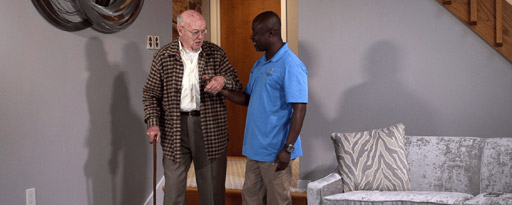
A professional caregiver does not prescribe or administer medication (that requires a licensed nurse). What a non-medical caregiver does is equally critical: they remind the person to take their medication at the right time, confirm they have taken the correct pills, observe for side effects or changes in condition, track refill schedules and coordinate with the pharmacy, and communicate concerns to the family and the medical team.
For many seniors, the difference between medication working and medication failing comes down to having another person present during the moments that matter. A caregiver who arrives each morning and evening to help with daily routines naturally covers the two highest-risk medication windows in the day.
SOLENVIA’s hourly caregiver services are designed for exactly this kind of support. A caregiver can be scheduled around the specific times your parent needs help most, whether that is a morning routine that includes medication and breakfast, an evening check-in that ensures the nighttime dose is taken, or both.
When Medication Management Alone Justifies Bringing in Help
Families sometimes feel that hiring a caregiver “just for medications” is excessive. It is not. Consider these situations:
- Your parent takes a blood thinner and has missed doses three or more times in the past month. A single missed dose may not cause harm, but a pattern of non-adherence with anticoagulants creates real risk of stroke or clot.
- Your parent uses insulin and lives alone. Incorrect insulin dosing can cause hypoglycemia severe enough to produce confusion, falls, seizures, or loss of consciousness. There is no safe margin for guessing with insulin.
- Your parent was recently discharged from the hospital with medication changes, and nobody at home is tracking what changed, what was discontinued, and what is new. The first two weeks after hospital discharge are the highest-risk period for medication errors.
- Your parent has early cognitive decline and still manages their own medications. This is one of the first functional abilities that deteriorates with dementia. By the time you notice the problem, errors may have been occurring for months.
- Your parent takes more than seven medications and sees multiple specialists. The complexity of the regimen exceeds what most people can manage reliably without support, regardless of cognitive status.
In any of these scenarios, the cost of a few hours of daily caregiver support is a fraction of what a single preventable hospitalization costs, both financially and in terms of your parent’s health and independence.
Connecticut Resources for Medication Safety
Connecticut families have access to several programs and resources specifically designed to help older adults manage medications safely.
- Connecticut’s Area Agencies on Aging (1-800-994-9422). Can connect families with medication management programs, in-home assessments, and referrals to pharmacists who specialize in geriatric medication review.
- Medicare Part D Medication Therapy Management (MTM). If your parent is enrolled in a Medicare Part D plan and meets certain criteria (multiple chronic conditions, multiple medications, high projected drug costs), they are eligible for free comprehensive medication reviews. The Part D plan is required to offer this service.
- Connecticut Poison Control Center (1-800-222-1222). Available 24 hours a day for questions about medication errors, accidental overdoses, or drug interactions. This is not just for emergencies. You can call with questions about whether a specific combination of medications is safe.
- CHCPE (Connecticut Home Care Program for Elders). For eligible residents age 65 and older, this state program can fund home care services that include medication reminders and daily support. The state-funded track has no income limit and an asset limit of $48,798 for a single person.
The Medication Safety Checklist
If your parent lives alone and manages their own medications, use this list to assess the current risk level.
- Do you have a complete, up-to-date list of every prescription, over-the-counter drug, vitamin, and supplement they take?
- Has a pharmacist reviewed the full list within the past 12 months?
- Is there a system for filling and tracking a weekly pill organizer, and who is responsible for filling it?
- Has the prescribing physician discussed whether any medications can be reduced or discontinued?
- Are all refill dates synchronized so medications do not run out at different times?
- Is someone checking in daily (in person or by phone) to confirm medications are being taken?
- Does your parent take any of the four highest-risk drug categories (blood thinners, insulin/diabetes drugs, antiplatelet agents, opioids)?
- Has your parent been hospitalized or had a medication change in the past 30 days?
- Is there any sign of cognitive decline that could affect their ability to manage medications independently?
If the answer to three or more of these questions raises a concern, it is time to put a more structured system in place, whether that means technology, pharmacy coordination, regular family check-ins, or professional caregiver support.
To discuss whether in-home caregiver support could help your parent manage medications safely and stay independent at home, call SOLENVIA at 860-498-9820 (CT) or 617-613-8721 (MA). Consultations are free and carry no obligation.
Sources
JAMA (2024). Polypharmacy Nearly Doubled in 20 Years Among Older Adults in US. jamanetwork.com/journals/jama/fullarticle/2821721
PharmD Live (2025). Polypharmacy in Aging Populations: Prevalence, Trends, and Risks. pharmdlive.com
National Committee for Quality Assurance (NCQA). Use of High-Risk Medications in Older Adults. ncqa.org
NEJM. Emergency Hospitalizations for Adverse Drug Events in Older Americans. nejm.org
Journal of General Internal Medicine (2025). Medication Errors and Gaps in Medication Discharge Planning for Hospitalized Older Adults. doi: 10.1007/s11606-025-09973-x
UofL Polypharmacy Initiative. Statistics on Polypharmacy in Older Adults. louisville.edu/medicine/polypharmacy
CDC. Falls Among Older Adults. cdc.gov